
Last updated: October 2026 · Cost data from the sources listed at the end
A new roof costs about $10,000 to $11,000 on average in the U.S., and most homeowners pay between $5,700 and $16,000 for an asphalt shingle roof. That works out to roughly $3 to $6 per square foot installed. Metal, tile and slate roofs cost two to five times more but last much longer. Here is what drives the price and how to compare quotes.
In this guide
National average: about $10,000 (Fixr, February 2026) to $10,800 (HomeGuide). Prices include tear-off of one layer, materials and labor for a typical single-story home.
Roof replacement cost by material
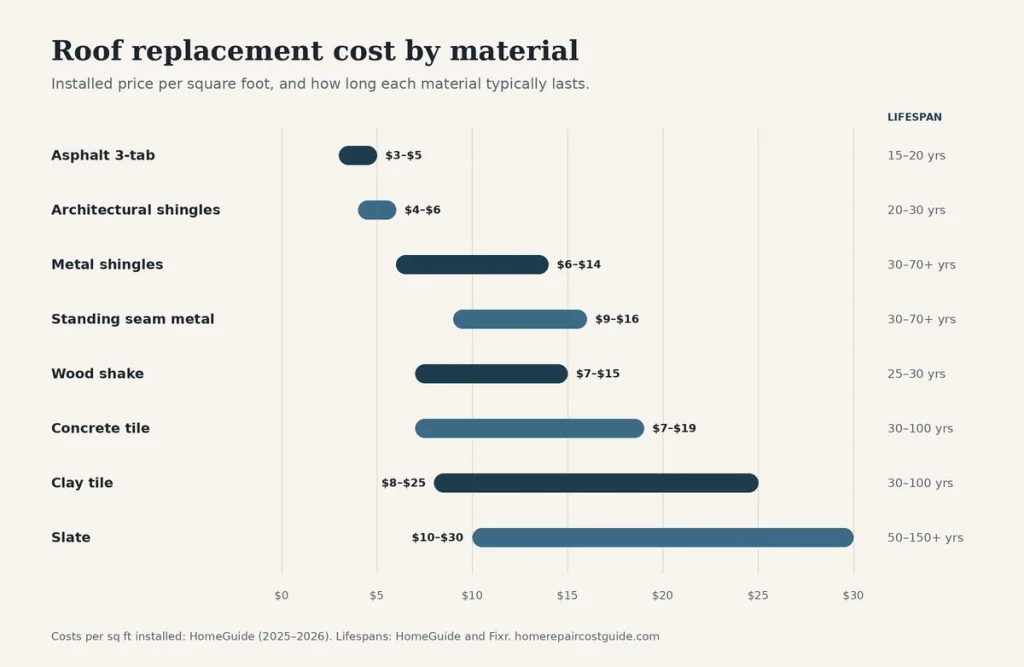
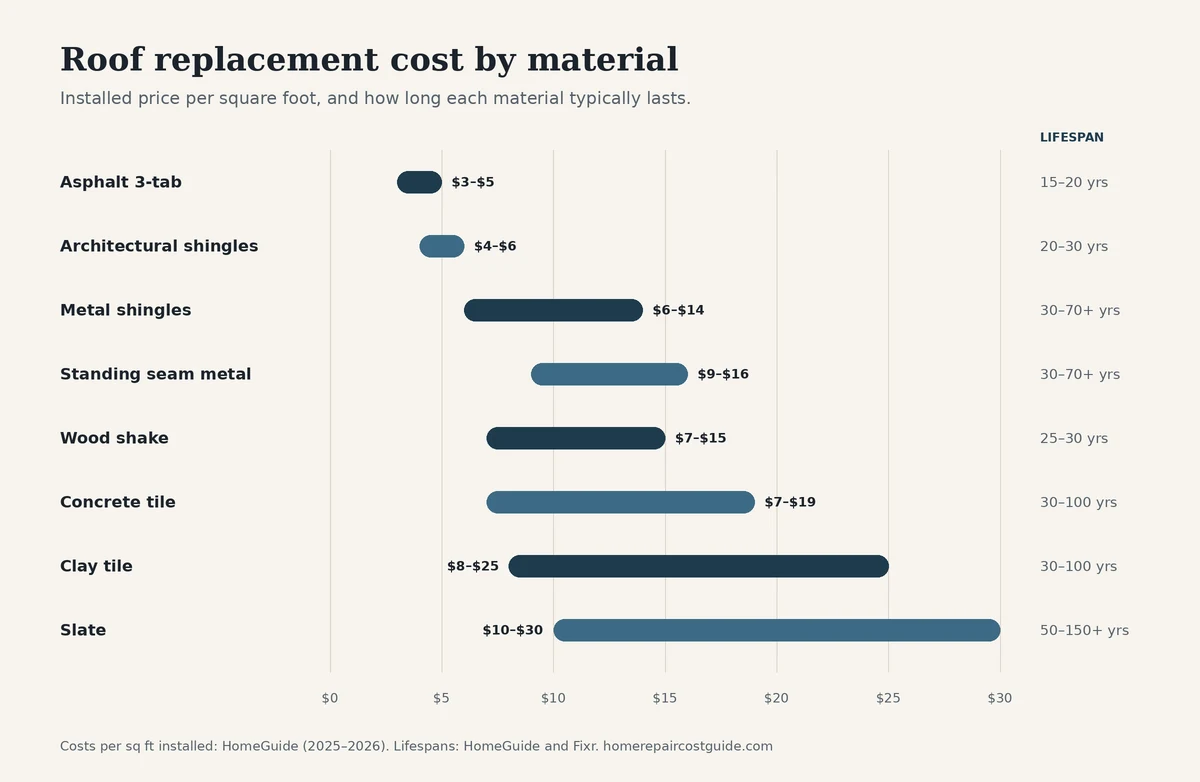
| Material | Installed, per sq ft | Typical total | Lifespan |
|---|---|---|---|
| Asphalt 3-tab shingles | $3–$5 | $5,700–$12,000 | 15–20 years |
| Architectural shingles | $4–$6 | $7,500–$16,000 | 20–30 years |
| Metal shingles | $6–$14 | $9,000–$35,000 | 30–70+ years |
| Standing seam metal | $9–$16 | $13,500–$40,000 | 30–70+ years |
| Wood shake | $7–$15 | $12,900–$28,200 | 25–30 years |
| Concrete tile | $7–$19 | $10,500–$47,500 | 30–100 years |
| Clay tile | $8–$25 | $20,000–$55,000 | 30–100 years |
| Slate | $10–$30 | $22,000–$70,000 | 50–150+ years |
| Flat roof (TPO, EPDM, PVC) | $3–$12 | $4,000–$16,800 | Varies by material |
Architectural (also called dimensional) shingles are now the most common choice. They cost a little more than 3-tab, look better, resist wind better and usually carry longer warranties.
Cost by home size
Roofs are measured in “squares” (100 square feet of roof). Your roof is larger than your home’s floor area because of the slope and overhangs. For a single-story home with a moderate (6:12) pitch and asphalt shingles:
| Home size | Approx. roof area | Typical cost |
|---|---|---|
| 1,000 sq ft | 1,120 sq ft | $3,500–$6,700 |
| 1,500 sq ft | 1,675 sq ft | $5,000–$10,100 |
| 2,000 sq ft | 2,235 sq ft | $6,700–$13,400 |
| 2,500 sq ft | 2,795 sq ft | $8,500–$16,800 |
| 3,000 sq ft | 3,355 sq ft | $10,100–$20,100 |
A two-story home with the same floor area has a smaller roof, but steeper or higher roofs cost more per square foot because of extra safety work.
What else affects the price
| Cost item | Typical price |
|---|---|
| Tearing off the old roof | $100–$300 per square |
| Replacing damaged decking | $2–$5 per sq ft |
| Permit | $100–$500 |
| Labor (share of total) | About 40%–60% |
- Pitch and height. Roofs steeper than about 6:12 need extra safety equipment and take longer.
- Complexity. Dormers, valleys, skylights and chimneys add flashing work and waste.
- Hidden damage. Rotten decking is only found once the old shingles are off, so ask for a per-sheet price in the contract.
- Number of layers. Removing two layers of shingles costs more than one.
- Season and demand. Prices and wait times rise after big storms.
- Location. Labor costs vary widely between regions.
Repair or replace your roof?
A roof with one leak or a few missing shingles usually just needs a repair, which averages around $800 to $1,000. Replacement makes more sense when:
- The roof is near or past its expected lifespan (about 20 to 30 years for architectural asphalt).
- Shingles are curling, cracking or losing lots of granules across the whole roof.
- You have recurring leaks in different places.
- Decking feels soft or sags between rafters.
- Storm or hail damage covers several slopes.
See roof repair cost and roof leak repair if you are not sure.
Can you put new shingles over the old ones?
A “roof-over” skips the tear-off and saves on removal costs, and many areas allow up to two layers of shingles. But it hides any damage to the decking, adds weight, often shortens the new roof’s life and can affect warranties. Most roofers recommend a full tear-off, especially if you plan to stay in the home.
Does homeowners insurance pay for a new roof?
Only when a covered event, such as wind, hail or a fallen tree, damages the roof enough that it needs replacing. Insurers don’t pay to replace a roof that is simply old or worn out.
- Roof age and payout. Some policies pay older roofs (often 10–15 years old) at actual cash value, minus depreciation, instead of the full replacement cost.
- Wind and hail deductibles can be a percentage of your home’s insured value, not a flat amount.
If a storm caused the damage, start with storm damage roof repair and hail damage on a roof.
How to save on a new roof
- Get at least three written quotes that list the same materials, underlayment and ventilation so you can compare like for like.
- Book outside peak storm season if you can: demand, and often prices, rise after big storms.
- Ask whether the roofer is certified by the shingle manufacturer, which can unlock a longer warranty.
- Replace gutters, skylights or ventilation at the same time if they need it, since the crew is already there.
How to hire a roofer (and red flags)
- Check the roofer’s license (where required), liability insurance and workers’ compensation.
- Ask for both the manufacturer’s warranty and the contractor’s workmanship warranty in writing.
- Make sure the contract covers tear-off, disposal, decking replacement price, flashing, drip edge, ventilation and cleanup.
- Avoid anyone asking for full payment up front, door-to-door crews after storms, or offers to cover your insurance deductible.
FAQ
How much does a new roof cost for a 2,000 sq ft house?
For a single-story 2,000 sq ft home with asphalt shingles, expect roughly $6,700 to $13,400. Architectural shingles, a steep pitch or a complex roof push the price higher.
What is the cheapest roof to install?
Asphalt 3-tab shingles are the cheapest at about $3 to $5 per sq ft installed, but they have the shortest lifespan. Architectural shingles cost a little more and usually offer better value over time.
Is a metal roof worth the extra cost?
It can be if you plan to stay in the home for decades. Metal costs two to three times more than asphalt but can last 30 to 70 years or more and stands up well to wind.
How long does a roof replacement take?
Most asphalt shingle roofs on an average home are replaced in one to three days. Tile, slate and complex roofs take longer.