
Last updated: October 2026 · Cost data from the sources listed at the end
Basement waterproofing costs anywhere from a few hundred dollars for sealing a crack to $10,000–$18,000 for excavating and waterproofing the outside of the walls. Most homeowners pay $3,000 to $10,000, or roughly $3 to $10 per square foot of basement. The right method, and the price, depends on where the water is coming from.
In this guide
Cost guides put the national average around $5,000 (Fixr) to $6,000–$18,000 for full interior or exterior systems (HomeGuide). The method you need matters more than the size of the basement.
Basement waterproofing cost by method
Waterproofing is not one product. It is a mix of fixes, and a contractor will usually combine two or three of them.
| Method | Where | Typical cost |
|---|---|---|
| Waterproof paint or sealant on walls | Interior | $1–$10 per sq ft |
| Crack injection (epoxy or polyurethane) | Interior | $250–$1,000 per crack |
| Interior perimeter drain (drain tile / French drain) | Interior | $40–$120 per linear ft |
| Full interior drain system | Interior | $4,000–$17,000 |
| Sump pump installation | Interior | $600–$2,500 |
| Wall vapor barrier | Interior | $1,500–$4,000 |
| Basement dehumidifier (installed) | Interior | $1,000–$2,800 |
| Exterior membrane on excavated walls | Exterior | $2–$7 per sq ft (plus excavation) |
| Exterior French drain | Exterior | $10–$100 per linear ft |
| Regrading soil away from the house | Exterior | $500–$5,000 |
| Gutters and downspouts | Exterior | $3–$30 per linear ft |
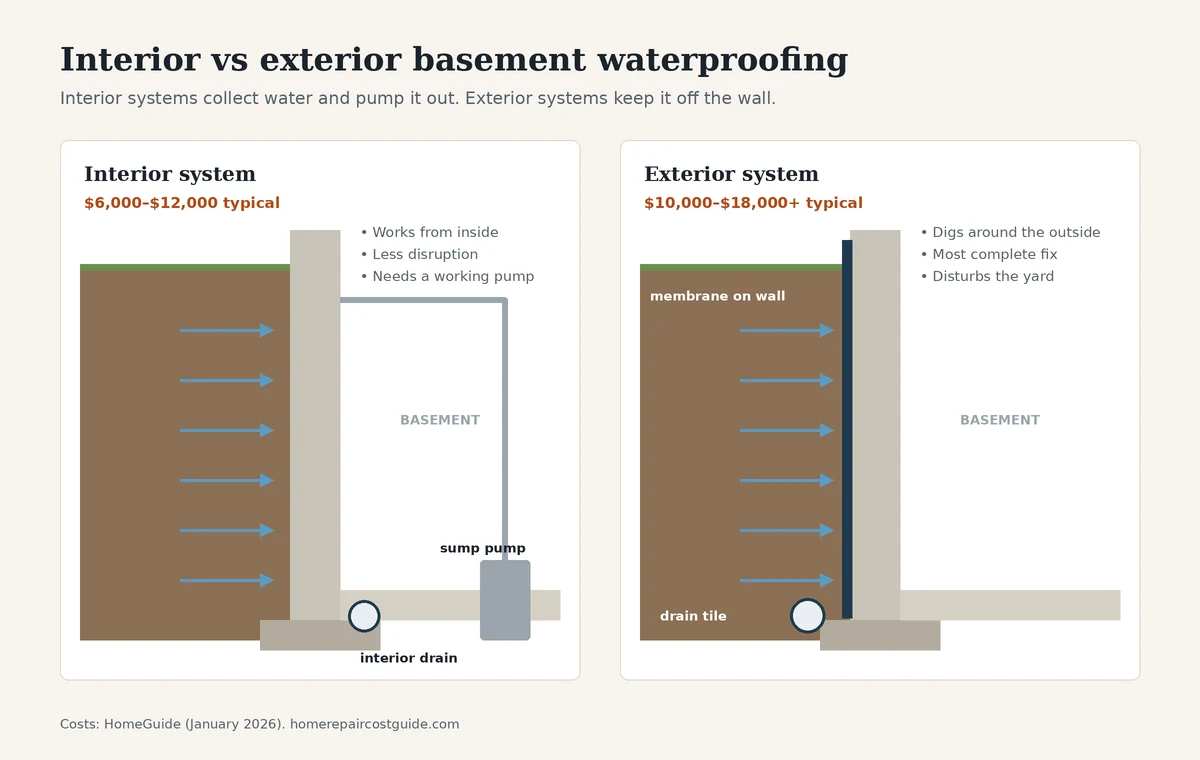
Interior vs exterior waterproofing
| Interior system | Exterior system | |
|---|---|---|
| Typical total | $6,000–$12,000 | $10,000–$18,000+ |
| How it works | Collects water that gets in and pumps it out | Stops water before it reaches the wall |
| Digging | Along the inside edge of the floor | Around the outside of the foundation |
| Disruption | Basement only; yard untouched | Landscaping, decks and walkways may need removal |
| Best for | Most leaking basements, water at the floor-wall joint | New builds, severe leaks, finished basements you can’t open up |
Interior systems are the most common fix because they cost less and don’t tear up the yard. They manage water rather than keep it out of the wall, so the sump pump has to keep working. Exterior waterproofing is the more complete fix but also the most expensive and disruptive.
Cost by basement size
At roughly $3 to $10 per square foot, typical totals look like this:
| Basement size | Typical range |
|---|---|
| 500 sq ft | $1,500–$5,000 |
| 750 sq ft | $2,250–$7,500 |
| 1,000 sq ft | $3,000–$10,000 |
| 1,500 sq ft | $4,500–$15,000 |
| 2,000 sq ft | $6,000–$20,000 |
Systems priced per linear foot (like perimeter drains) depend on the length of the walls rather than the floor area, so a long, narrow basement can cost more than a square one with the same area.
First, find where the water comes from
Paying for the wrong fix is the most expensive mistake. Before you call a waterproofing company, check:
- Gutters and downspouts. Overflowing gutters and downspouts that empty next to the wall are the most common cause of wet basements, and the cheapest to fix.
- Grading. The soil should slope away from the house. If it slopes toward it, water collects against the foundation.
- Condensation vs leaks. Tape a square of plastic wrap to the wall for a couple of days. Moisture on the room side means condensation (a dehumidifier problem); moisture behind the plastic means water coming through the wall.
- Cracks. Water through a single crack can often be stopped with an injection instead of a full system. See foundation crack repair.
- Water at the floor-wall joint after heavy rain usually means hydrostatic pressure under the slab, which is what interior drains and sump pumps are built for.
Cleaning gutters, adding downspout extensions and regrading a few feet of soil can cost a few hundred dollars and solve many damp basements. If water still gets in after a season of heavy rain, then get quotes for a drainage system.
What else affects the price
- Severity: occasional dampness costs far less to fix than standing water after every storm.
- Finished basements: drywall, flooring and built-ins may need to come out and go back in.
- Wall type: concrete block walls can hold water in their cores and often need weep holes and drainage.
- Access and obstacles outside: decks, driveways and landscaping raise the cost of exterior work.
- Local labor rates and permits for excavation or electrical work for the sump pump.
Does homeowners insurance cover basement waterproofing?
No. Waterproofing is treated as maintenance or an improvement, so insurers don’t pay for it. Water damage in the basement is a separate question:
- Sudden internal water, like a burst pipe or a failed water heater, is often covered.
- Groundwater seeping through walls or gradual leaks are usually excluded.
- Flooding from outside needs a separate flood insurance policy.
- Sump pump failure or sewer backup is excluded unless you add a water backup endorsement.
Learn more in does homeowners insurance cover water damage and basement flooding: what to do.
Is basement waterproofing worth it?
Usually, yes, if water is getting in regularly. Ongoing moisture leads to mold, damaged belongings and finishes, and can make a home harder to sell. A dry basement also adds usable space. Ask for a transferable warranty: it protects you and can reassure future buyers.
How to hire a waterproofing contractor
- Get at least three inspections and written quotes. Ask each company where they think the water is coming from.
- Compare what each system includes: drain length, sump pump model, battery backup, wall membrane, and the warranty.
- Be cautious of quotes that only offer the most expensive system without checking gutters and grading first.
- Check licensing, insurance and reviews, and avoid large cash deposits.
FAQ
How much does it cost to waterproof a basement?
Most homeowners pay $3,000 to $10,000, or about $3 to $10 per square foot. Full interior drainage systems often run $6,000 to $12,000, and exterior waterproofing $10,000 to $18,000 or more.
Is interior or exterior waterproofing better?
Exterior waterproofing keeps water away from the walls and is the more complete fix, but it costs more and requires excavation. Interior drains with a sump pump are cheaper, less disruptive and effective for most leaking basements.
Can I waterproof my basement myself?
You can clean gutters, extend downspouts, regrade soil and apply waterproof paint to dry walls. Drainage systems, sump pumps and exterior membranes are best left to professionals.
How long does basement waterproofing last?
Professionally installed drainage systems and exterior membranes can last decades. Sealant paints may need reapplying after several years, and sump pumps wear out and need replacing every so often, so test yours each year.