
Last updated: October 2026 · Cost and health guidance from the sources listed at the end
Mold in a crawl space is common, especially in humid climates and in homes with open vents and a bare dirt floor. Removing it usually costs $1,500 to $4,000 for a typical crawl space. But cleaning it off is only half the job: if you don’t stop the moisture that feeds it, it comes back. Here is how to recognize it, how serious it is, what removal costs and how to keep it from returning.
In this guide
Professional mold removal runs about $15–$30 per sq ft of affected area. Fixing the moisture source (vapor barrier, dehumidifier, drainage) is priced separately.
Signs of mold in your crawl space
- A musty, earthy smell in the rooms above, often strongest in closets or near floor vents.
- Fuzzy white, gray, green or black growth on floor joists, the subfloor, insulation or ductwork.
- Damp or sagging insulation hanging from the subfloor.
- Condensation on pipes or ducts, or standing water on the ground or vapor barrier.
- Cupping or soft wood floors above the crawl space.
- Allergy-like symptoms (sneezing, runny nose, itchy eyes) that ease when you leave the house.
White, powdery deposits on concrete or block walls are often efflorescence: mineral salts left behind as water evaporates. It isn’t mold, but it does show that water is moving through the wall. Efflorescence crumbles into powder when you rub it and dissolves in water; mold smears and often has a fuzzy texture. Mold also grows mostly on wood and other organic material, not bare masonry.
What causes crawl space mold?
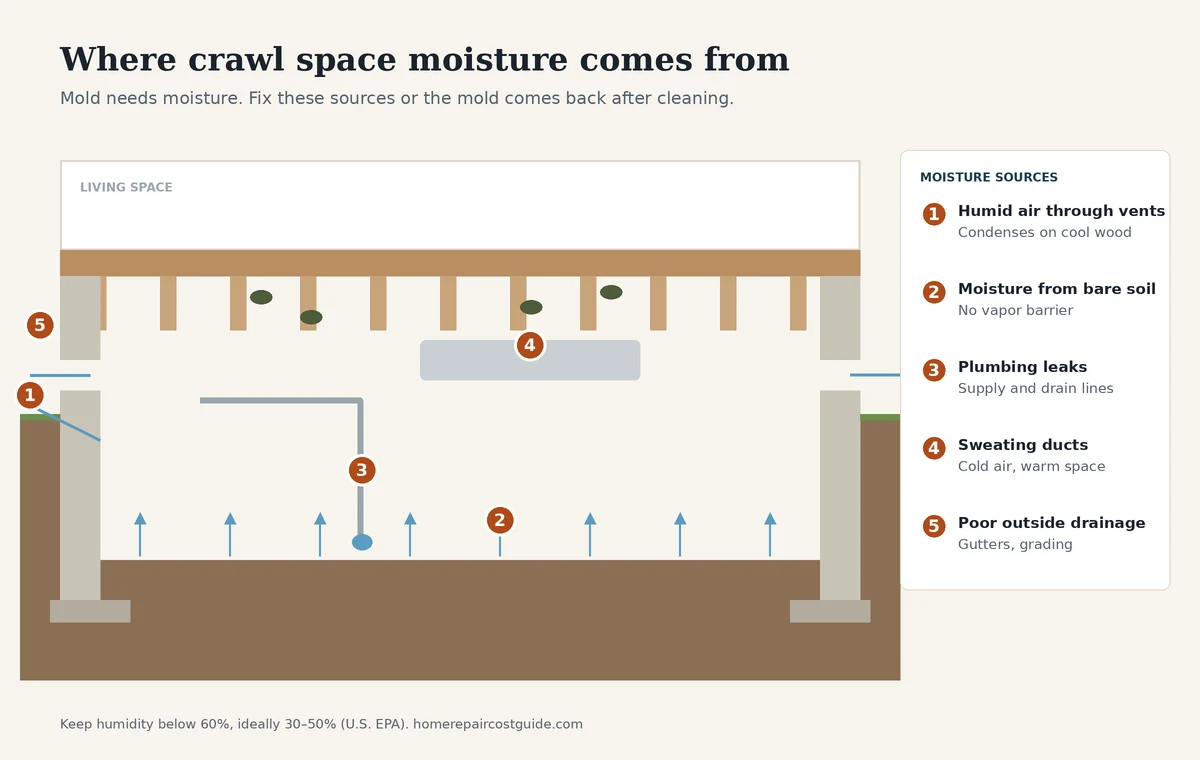
Mold needs moisture, mild temperatures and something to feed on. Crawl spaces have all three: wood framing, paper-faced insulation, and plenty of moisture from these sources:
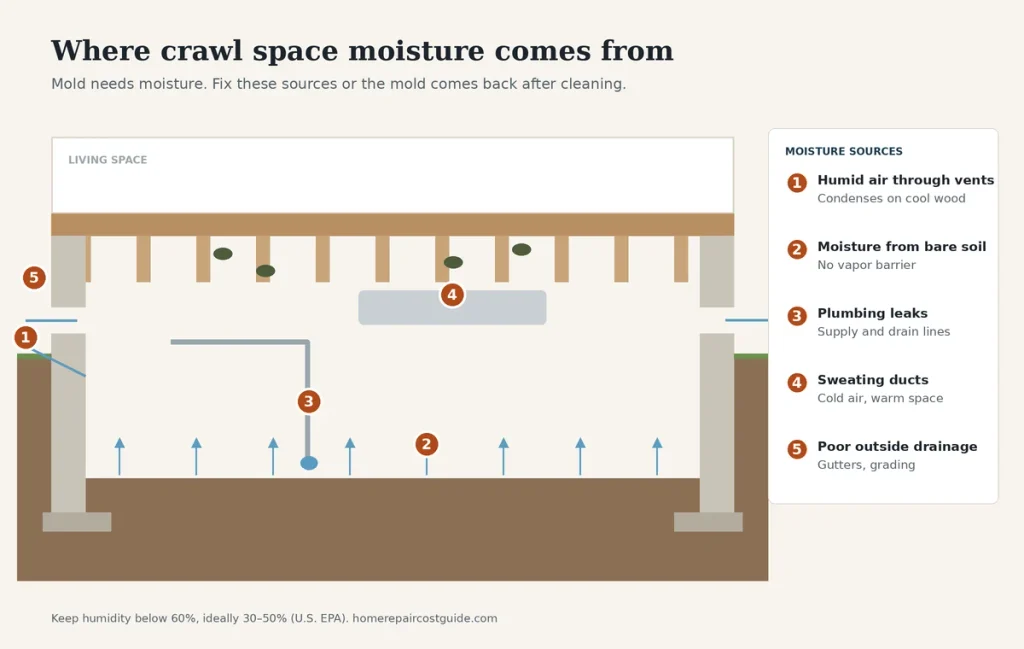
- Humid outdoor air through open vents. In summer, warm humid air enters the cooler crawl space and condenses on wood, pipes and ducts.
- Moisture rising from bare soil. Without a proper vapor barrier, the ground constantly releases water vapor.
- Plumbing leaks from supply lines, drain pipes or the water heater.
- Poor drainage outside. Clogged gutters, short downspouts and soil sloping toward the house send rainwater under the home.
- Sweating HVAC ducts carrying cold air through a warm, humid space.
Is mold in the crawl space dangerous?
According to the U.S. Environmental Protection Agency (EPA), mold produces allergens and irritants, and exposure can cause allergic reactions such as sneezing, runny nose, red eyes and skin rash. It can also trigger asthma attacks in people who are allergic to mold. Air from the crawl space can move up into the living space, so mold below the floor is not just a problem “down there”.
The color of the mold doesn’t tell you how harmful it is, and the EPA notes that when mold is visible, testing to identify the type is usually unnecessary: it needs to be removed either way. If anyone in the home has asthma, allergies or a weakened immune system, talk to a doctor and consider leaving the cleanup to professionals.
Mold in crawl space removal cost
| Service | Typical cost |
|---|---|
| Mold inspection (average home) | $300–$650 |
| Crawl space mold removal | $1,500–$4,000 |
| Mold removal, priced per sq ft of affected area | $15–$30 per sq ft |
| Replacing damaged insulation (removal of old) | +$1–$2 per sq ft |
| Vapor barrier installation | $1,200–$4,000 |
| Crawl space dehumidifier, installed | $1,000–$3,500 |
| Full crawl space encapsulation | $3,000–$15,000 |
What moves the price: how much of the crawl space is affected, how low and tight it is (contractors charge more for spaces they have to crawl through on their stomachs), whether insulation or wood has to be replaced, and whether the moisture source is fixed at the same time. For the full breakdown, see mold remediation cost and crawl space encapsulation cost.
Can you remove crawl space mold yourself?
The EPA says you can usually handle a moldy area of less than about 10 square feet (roughly 3 ft by 3 ft) yourself. Crawl spaces make even small jobs harder: they are tight, dark and often have poor airflow, so protective gear matters.
If the area is small and you go ahead:
- Wear an N-95 respirator, gloves and goggles.
- Scrub mold off hard surfaces like wood joists with detergent and water, then dry the area completely.
- Throw away moldy insulation and other porous materials in sealed bags rather than trying to clean them.
- Fix the moisture source first, or the mold will return.
- Mold covers more than about 10 square feet.
- The space flooded, or the water came from a sewage or drain line.
- Mold is on or inside HVAC ducts, which can spread spores through the house.
- Anyone in the home has asthma, allergies or other health concerns.
How to keep mold from coming back
Removing the mold without changing the conditions is the most common and most expensive mistake. Work through these in order, cheapest first:
- Fix leaks in plumbing and ductwork.
- Manage rainwater: clean gutters, extend downspouts 4 to 6 feet from the house and make sure soil slopes away from the foundation.
- Cover the ground with a heavy vapor barrier, overlapped and taped at the seams.
- Control humidity. The EPA recommends keeping indoor humidity below 60%, ideally between 30% and 50%. A crawl space dehumidifier helps in humid climates.
- Consider encapsulation: sealing vents, lining the walls and floor and conditioning or dehumidifying the space. It costs more, but it addresses the cause.
- Dry any water within 24 to 48 hours after a leak or flood. That is the window the EPA gives for preventing mold growth.
If you also see mold in the attic, the cause is usually ventilation or a roof leak rather than the crawl space: see mold in the attic.
Does homeowners insurance cover crawl space mold?
Usually not. Most policies exclude mold that results from ongoing humidity, gradual leaks or lack of maintenance, which is how most crawl space mold starts. Mold may be covered when it results from a sudden, covered event, such as a pipe that bursts under the house, and even then many policies cap mold coverage at a low limit unless you add a mold endorsement.
If a sudden leak caused the problem, document it with photos, keep repair receipts and report it promptly. Read more in does homeowners insurance cover water damage.
FAQ
How much does it cost to remove mold from a crawl space?
Most homeowners pay $1,500 to $4,000 for professional crawl space mold removal, depending on the size of the area and how accessible it is. Adding a vapor barrier, dehumidifier or full encapsulation to prevent regrowth costs extra.
Is crawl space mold normal?
It is common, especially in humid regions and vented crawl spaces, but it isn’t something to ignore. It can affect indoor air, damage wood over time and usually points to a moisture problem that needs fixing.
Should I test the mold in my crawl space?
If you can see it, the EPA says testing is usually unnecessary because it needs to be removed whatever type it is. A general inspection is still useful to find the moisture source and judge how far the mold has spread.
Will a dehumidifier get rid of crawl space mold?
No. A dehumidifier helps stop mold from growing by keeping humidity down, but existing mold has to be cleaned or removed. Use both: remove the mold, then control the moisture.